

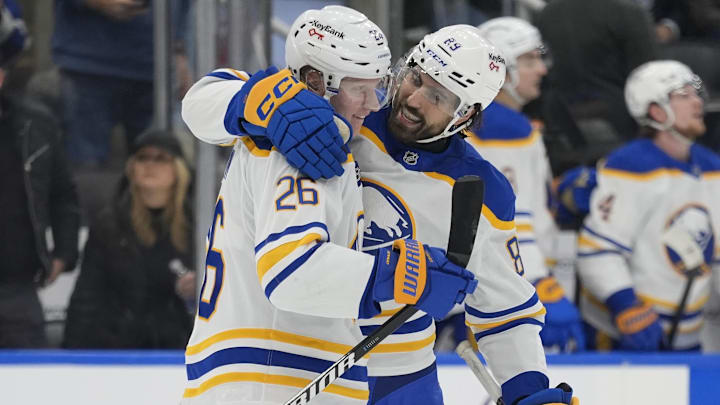
The NHL's three-week hiatus for the 2026 Winter Olympics in Italy came at a perfect moment for the Buffalo Sabres. They'd lost three of their last four games while trying to overcome a barrage of injuries that significantly depleted their roster.
Before the lull, the Sabres had posted a remarkable 20-3-1 record across a 24-game span to surge up the Eastern Conference standings. They'll return to action Wednesday night against the New Jersey Devils as owners of the top wild-card position in the East.
Here are Buffalo's chances to end its 14-year playoff drought according to multiple outlets:
Outlet | Sabres Playoff Odds |
|---|---|
HockeyStats.com | 88% |
Hockey Reference | 83.5% |
Playoff Status | 80% |
Power Rankings Guru | 79.4% |
DraftKings Sportsbook | 79.2% (-380 odds) |
The Athletic | 79% |
HockeyViz | 78.2% |
MoneyPuck | 67.8% |
So, even though the Sabres have come a long way since they occupied the conference basement in early December, they will need to maintain a high level of play over the final 25 games of the regular season to finally punch a postseason ticket.
Their margin for error has already shrunk as the red-hot Columbus Blue Jackets, the first team outside the East's top eight, moved within five points of Buffalo with a game in hand thanks to a seven-game winning streak leading into the Olympic break.
How aggressive should Sabres general manager Jarmo Kekalainen be ahead of the 2026 NHL trade deadline?
Buffalo is in a versatile position as it heads toward the March 6 trade deadline as an unquestioned buyer for the first time in over a decade.
It gives Jarmo Kekalainen, who inherited the Sabres front office after Kevyn Adams was fired in mid-December, a few different avenues to traverse over the next couple weeks.
At minimum, the Sabres GM should be targeting a top-nine, offensive-minded forward who can replace Peyton Krebs as head coach Lindy Ruff's preferred option to move up the lineup when injuries strike. Krebs shouldn't be anywhere near the first line in truly meaningful games.
The bare-bones deadline approach should also include the Blue and Gold bringing in some defensive depth given the struggles of third-pairing options like Jacob Bryson and Zach Metsa when Michael Kesselring and Conor Timmins have been sidelined by injuries.
Kekalainen could also try to swing a blockbuster. A high-profile player like St. Louis Blues center Robert Thomas fits the Sabres' timeline perfectly and, while it would come at an enormous cost, it would eliminate questions about the No. 1 center role for the foreseeable future.
Whether it's Thomas or another NHL superstar, Buffalo could put some of its top assets, including A-tier prospects and its 2026 first-round draft pick, on the table to go big-game hunting.
Then there's the conservative asset-management mindset. This would probably be a bigger part of the conversation if the Sabres weren't riding the longest postseason drought in NHL history because it would require trading Alex Tuch to set the club up best for 2026-27 and beyond.
As it stands, the Blue and Gold are almost surely going to keep Tuch as an "own rental" instead.
Finally, the Sabres could merely stand pat. Trust the current roster is good enough to make a long-awaited playoff return without sacrificing young players and draft picks that could help in the future.
While it's not the worst idea in a vacuum, it feels like Kekalainen needs to send a message to the locker room and fanbase that he's all-in on trying to make some serious noise this season. Even a few modest upgrades could go a long way given the team's current position.
In addition, Buffalo hasn't been able to shake the injury bug dating all the way back to training camp, so not bringing in some battle-tested depth would be a risk, too.
Ultimately, the Sabres (and their long-suffering fans) have a lot of reason for optimism, as the playoff odds illustrate, but there are no guarantees until a spot is clinched. A successful trade deadline could help accelerate that process.
 Add us as a preferred source on Google